Opal Body Tone Explained: How Background Colour Affects Brightness & Value
Share
What Is Opal Body Tone?
Body tone refers to the background against which an opal's colour play appears. It has nothing to do with the colours themselves - it's the canvas the colours perform on. The three types you'll find at Georgie's Gem Studio are boulder opal, crystal opal, and white opal, each with a distinctly different character.
Boulder Opal
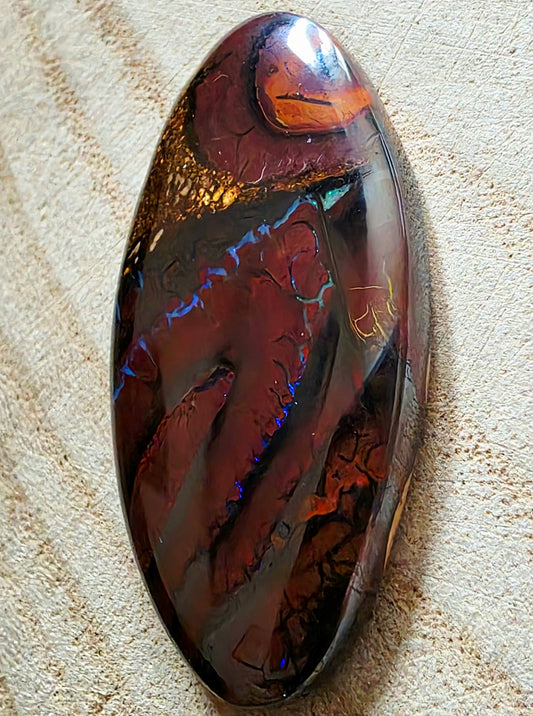
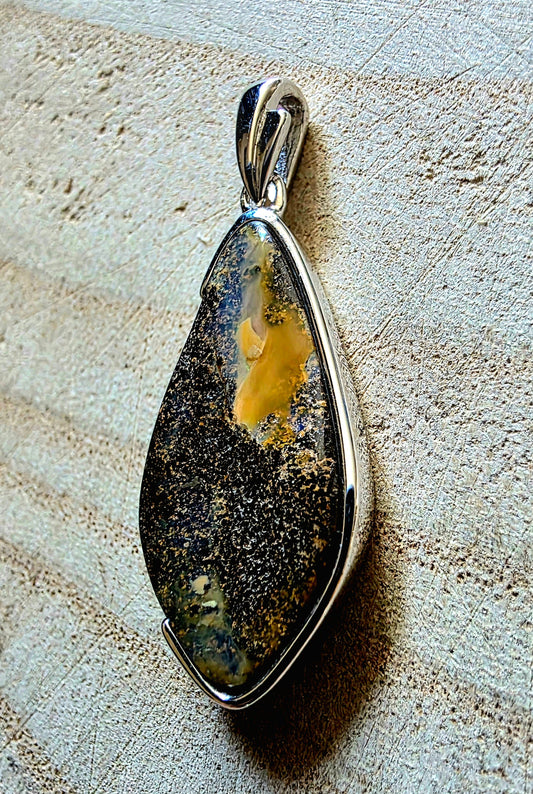
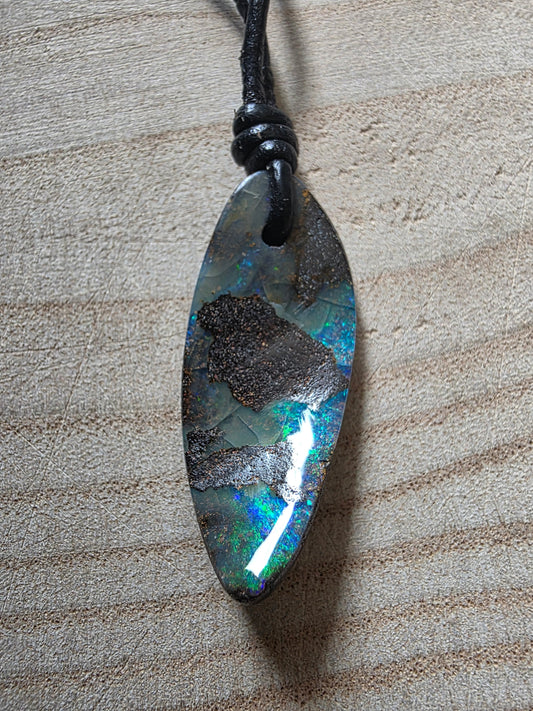
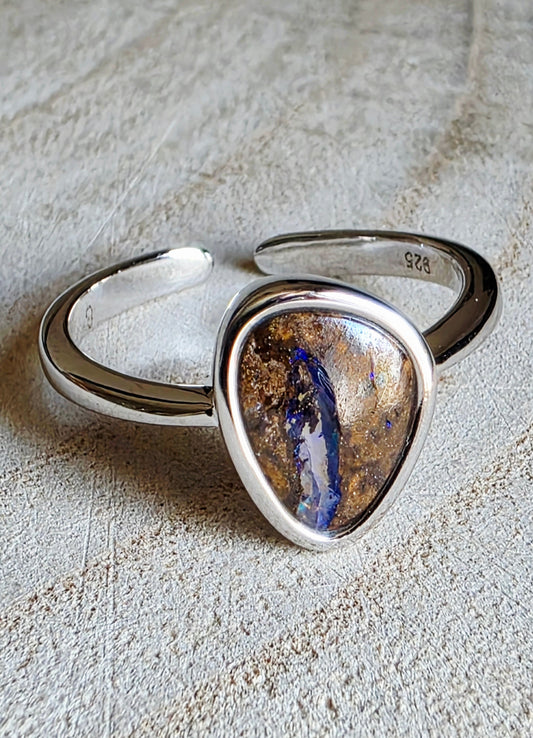
Boulder opal is formed within ironstone host rock, and the natural dark ironstone backing acts like a built-in black base - similar in effect to precious black opal, but formed entirely naturally as part of the stone. This is what makes boulder opal so special: the dark background creates extraordinary contrast, making colour play appear vivid, saturated, and dramatic even at moderate brightness grades.
Boulder opal comes primarily from Queensland - from fields including Yowah and Winton, and no two stones are alike. The ironstone matrix is part of the stone's identity, not a flaw, and many collectors prize the organic, landscape-like patterns it creates.
Because of the natural dark backing, boulder opals often punch well above their weight visually - a B3 boulder opal can look more striking than a B4 white opal.
Crystal Opal
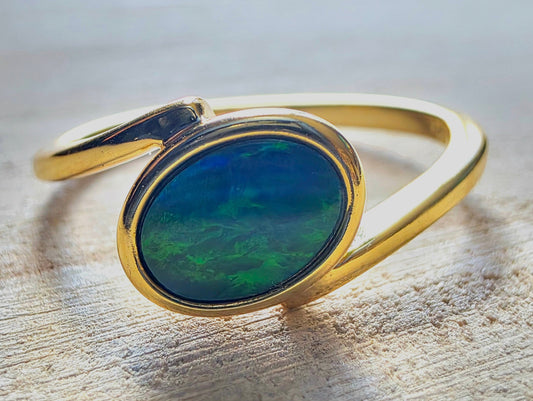
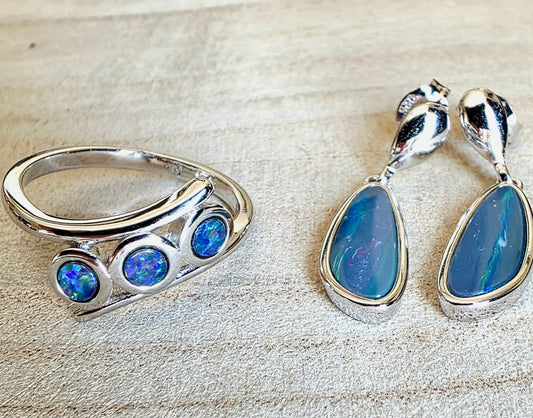
Crystal opal is transparent or semi-transparent, with little or no body colour. Rather than sitting against a background, the colour play appears to glow from within the stone - an ethereal, floating quality that's unlike any other gem.
The transparency means body tone is less about background contrast and more about the intensity of colour firing through the stone. The best crystal opals appear lit from within, with colours that shift and roll as the stone moves. Crystal opal is found across several Australian fields including Lightning Ridge and Coober Pedy.
White Opal
White opal has a pale, milky background and is the most commonly found Australian opal, particularly from Coober Pedy and Mintabie in South Australia. The light base means colour play needs to be stronger to stand out - a B4 or B5 white opal can be breathtaking, while lower brightness grades may appear soft or subtle.
Many collectors love the delicate, pastel quality of white opals - they have a gentleness that boulder and crystal stones don't always have.
Body Tone vs Brightness: What's the Difference?
These two qualities are graded separately because they measure different things:
- Body tone = the background character of the stone (boulder, crystal, white)
- Brightness (B1–B5) = how strongly the colour play appears
A B4 boulder opal and a B4 crystal opal are equally bright - but they'll look completely different. Neither is objectively better; it comes down to the look you love and the setting the stone is destined for.
Which Is Right for You?
- Choose boulder opal if you want bold, vivid colour play with a natural dark backing and an organic, one-of-a-kind character
- Choose crystal opal if you love the idea of colour that seems to float inside the stone - luminous and ethereal
- Choose white opal if you prefer something softer, more delicate, and often more accessible at equivalent sizes
There's no wrong answer. The best opal is the one that speaks to you.
Want to understand how we grade brightness? Read our Opal Brightness Guide: the B1–B5 scale explained
Curious about where our opals come from? Read about our Ethical Opal Sourcing