Your Questions, Answered

About Our Australian Opals

Where do your opals come from?

All our opals are sourced directly from small-scale Australian miners across fields including Lightning Ridge, Yowah, Coober Pedy, and more. We buy directly - no mass-market wholesalers, no mystery parcels. Just real people, real mines, and real stories.

Are your opals natural?

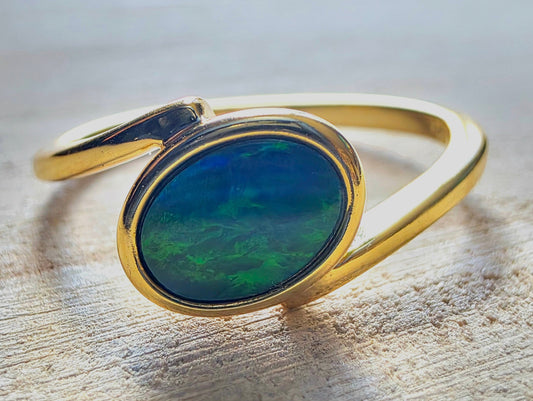
Yes, always. Every opal we use is a solid or doublet natural Australian opal - never synthetic, never lab-made, never triplets.

What does the brightness rating mean?

We grade every opal on the Australian industry-standard B1–B5 brightness scale. B1 is the most subtle, B5 is the most vivid. Brightness is always listed in the product description so you know exactly what you're buying.

Find out more here: Opal Brightness Guide

Can I wear opal jewellery every day?

Yes, with a little care. Put jewellery on after applying lotions or perfume, remove before swimming or heavy exercise, and avoid knocks. Opal is a natural gemstone gentle handling goes a long way.

Find out more here: How to Care for Australian Opal

How do I clean my opal jewellery?

Simply wipe with a soft, damp cloth. Mild soap is fine if needed. Avoid ultrasonic cleaners, steamers, harsh chemicals, or soaking. For sterling silver settings, a silver polishing cloth is safe - just avoid rubbing the opal itself.

Find out more here: How to Care for Australian Opal

Can I get Australian opals wet?

Yes you can, Australian opal is non-porous so won't spoil in water. It doesn't need to be stored in water and it's fine if it gets wet; just dry it gently afterwards.

Find out more here: How to Care for Australian Opal

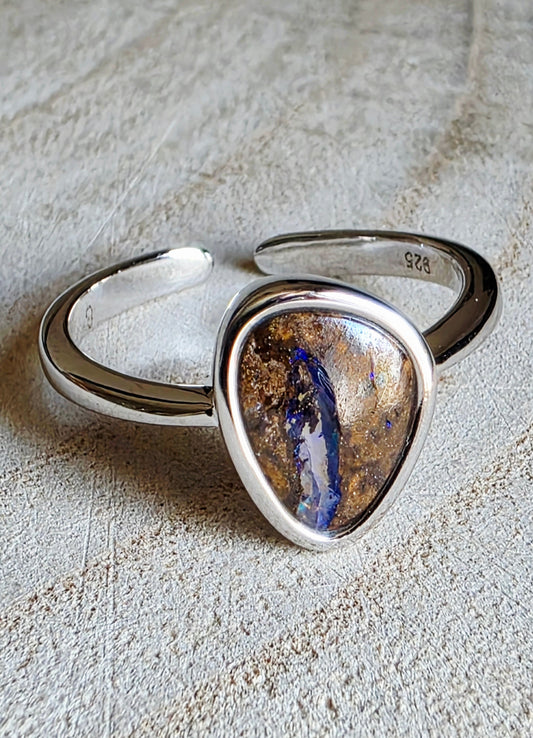
What is a boulder opal?

What is an opal doublet?

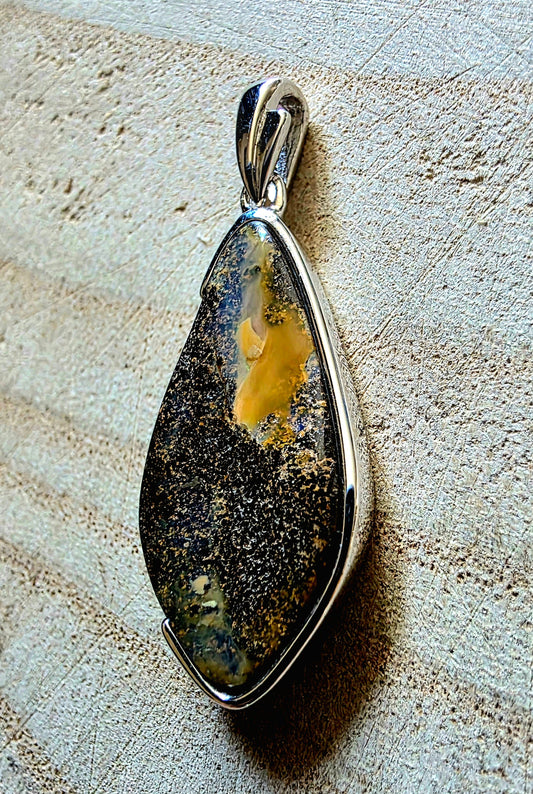
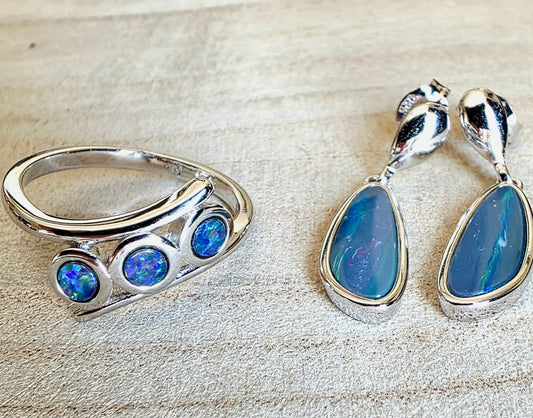
A doublet opal features a natural opal layer combined with its host rock - in our case, the opal remains naturally attached to the ironstone boulder it formed in, just as nature intended. This is quite different from commercially produced doublets, where a thin slice of opal is glued onto a backing material.

Because our doublets are naturally bonded to their host rock, they're more stable, more honest, and carry the full story of where they came from. The host rock also enhances the opal's colour play, often making the stone appear richer and more vivid.

What is an opal triplet?

A triplet is a composite stone made of three layers: a thin slice of natural opal sandwiched between a dark backing and a clear domed cap (usually glass or quartz). The cap magnifies the colour and the dark backing enhances it - but the actual opal content is very thin.

Triplets are widely used in the jewellery industry as a more affordable option, but they come with trade-offs: the layers can separate over time, they're sensitive to moisture, and they shouldn't be submerged in water.

At Georgie's Gem Studio, we don't use triplets. Every piece we make uses solid or naturally bonded doublet opal - so what you see is genuine, substantial opal, not an enhanced slice.

What's the difference between boulder, black, crystal, and white opal?

These are the main types of natural Australian opal, each with its own character:

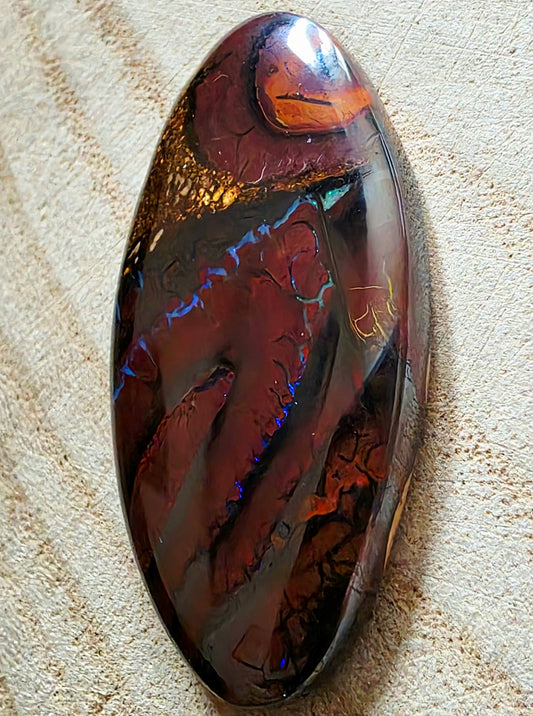
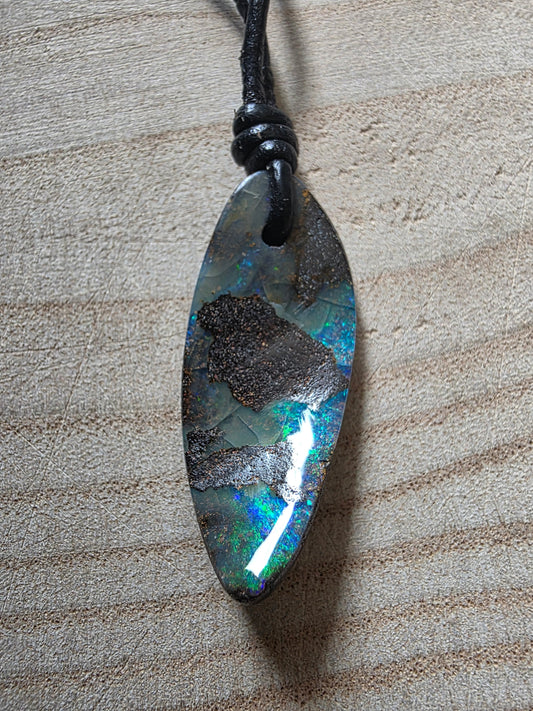
Boulder opal forms within ironstone rock. Rather than being cut away from the host rock, the opal is left naturally attached - giving each stone a unique shape and a rich, dark backing that intensifies the colour play. Boulder opals are one-of-a-kind by nature.
Explore our Boulder Opals

Black opal has a dark body tone (grey to jet black) which makes the colours appear vivid and dramatic. Mined primarily at Lightning Ridge in New South Wales, black opal is the rarest and most valuable type of Australian opal.

Crystal opal is transparent or semi-transparent, allowing light to pass through the stone. This gives it a glowing, almost luminous quality. Crystal opals can have any body tone and are prized for their depth and clarity of colour.
Explore our Crystal Opals

White opal (also called light opal) has a pale, milky body tone. The colours tend to be softer and more pastel compared to black opal, but a high-brightness white opal can still be stunning. White opal is the most widely available type and is often a great entry point for opal lovers.

Do Australian opals crack or craze?

It's one of the most common concerns about opals - and mostly a myth when it comes to Australian opal.

Crazing (a network of fine cracks that can appear in some opals) is almost exclusively associated with Ethiopian opals, which are porous and absorb water. When they dry out unevenly, they can craze. Australian opal is a completely different story.

Solid Australian opal (including the boulder, crystal, and white opals we use) is non-porous and naturally stable. It doesn't absorb water, doesn't dry out, and won't craze under normal conditions. Many Australian opals are millions of years old and still look exactly as they did when they came out of the ground.

That said, opal is a relatively soft gemstone (5.5–6.5 on the Mohs scale), so it can chip or scratch if knocked hard against a surface. A little mindful handling - avoiding drops and hard knocks - is all it takes to keep your piece looking beautiful for a lifetime.

What metal do you use in jewellery?

All our jewellery is made with 925 sterling silver, which is stamped to confirm its purity. Some pieces are also available in 18k (or 18ct) gold plated sterling silver, for a warmer tone while retaining the quality of a solid silver base.

You may notice that our pieces don't carry a UK hallmark - this is perfectly normal. Under UK law, hallmarking is only compulsory for silver items above 7.78g, and many of our delicate pieces fall below this threshold. The 925 stamp on each piece is your assurance of the metal quality.

We also have some pendants that use silver tone bails, these bails are replaceable.

All jewellery pieces clearly state the metal purity for your reassurance.

Are opals bad luck?

Not at all - in fact, for most of history, opals were considered the luckiest gemstone of all. Ancient Romans called opal the "Queen of Gems" and believed it carried the power of every gemstone whose colour it reflected. In the Middle Ages, opal was thought to bring good fortune and protect eyesight.

The bad luck myth is largely traced to an 1829 novel by Sir Walter Scott, in which an opal plays a dramatic role in a fictional story. It was never based in fact - but the story stuck, and was reportedly so damaging to opal sales that rivals in the gem trade helped keep it alive.

In Australia, where the world's finest opals are found, opals are a source of national pride not superstition. And we at Georgie's Gem Studio think they're something to be celebrated, worn, and loved.

Buying from Georgie's Gem Studio

Do you offer bespoke or custom pieces?

We don't currently offer a formal bespoke service, but it's something we're working towards - so watch this space.

That said, if you have something specific in mind, we're happy to have a conversation. Through our direct relationships with Australian miners, we may be able to source particular stone types, colours, or sizes on request. Please be aware that sourcing from Australia comes with a longer lead time, so this isn't a quick turnaround option.

If you'd like to explore this, get in touch and tell us what you're looking for - we'll always be honest about what's possible.

Contact us to find out more.

Do you sell investment-grade opals?

Australian opal particularly high-brightness black opal from Lightning Ridge and fine boulder opal from Queensland - is increasingly recognised as a tangible alternative investment. Top-grade stones are finite, non-renewable, and growing in scarcity as mining fields mature.

We don't hold a permanent inventory of investment-grade stones, but through our direct relationships with Australian miners we can source specific stones on request — whether you're looking for a particular type, brightness grade, size, or origin field.

If you're interested in acquiring opal for investment purposes, get in touch and tell us what you have in mind. We'll be honest about what's available, what the lead time looks like, and whether it's a good fit for what you're looking for.

Contact us to find out more.

How long does delivery take?

UK orders are dispatched within 1–3 working days and delivered via Royal Mail Tracked 48 (2–3 working days) or Tracked 24 (1–2 working days).

International estimated times are 3–8 working days for Europe and 8–14 working days for the rest of the world.

For international orders, we hop you will receive your purchases faster than these times, but it cannot be guaranteed by international carriers and customs delays in your country.

Read more in our Shipping policy

What does delivery cost?

UK delivery is free on orders of £150 or more. International orders are shipped with tracked postage - the cost is calculated at checkout.

Read more in our Shipping policy

Will I be charged customs or import duties?

All orders are shipped from the UK.

International orders may be subject to import duties, taxes, or customs fees on arrival. These charges are set by your local authority and are the responsibility of the recipient - we're unable to predict or cover them.

Read more in our Shipping policy

What is your returns policy?

We accept returns on unworn, unused items within 14 days of delivery. Earrings, custom, and made-to-order pieces cannot be returned for hygiene or personalisation reasons unless faulty.

To start a return, contact us with your order number and reason for return. Return postage is the buyer's responsibility unless the item is faulty.

Read more in our Returns and refund policy

What if my item arrives damaged?

Please contact us as soon as possible with photos of the issue. We'll offer a replacement where possible, or a full refund if not. Return postage for faulty items is covered by us once the item is received and assessed.

Read more in our Returns and refund policy

Do you offer exchanges?

We don't offer direct exchanges - every piece is one-of-a-kind, so stock can't be replaced with a duplicate. The best approach is to return your item (if eligible) and place a new order for something you love.

Read more in our Returns and refund policy