What Colour Are Opals? A Guide to Opal Colours & Play-of-Colour
Share
Why Are Opals So Uniquely Colourful?
No two opals are alike. Unlike most gemstones, which derive their colour from trace minerals, opals produce colour through the physics of light itself - making them one of the most visually dynamic stones in the natural world. Whether you've searched for 'what colour are opals' or simply been captivated by one in a jeweller's window, this guide will help you understand exactly what you're seeing.
Body Tone: The Foundation of an Opal's Colour
Every opal has a base colour, known as its body tone and it has a significant effect on how the stone's play-of-colour appears.
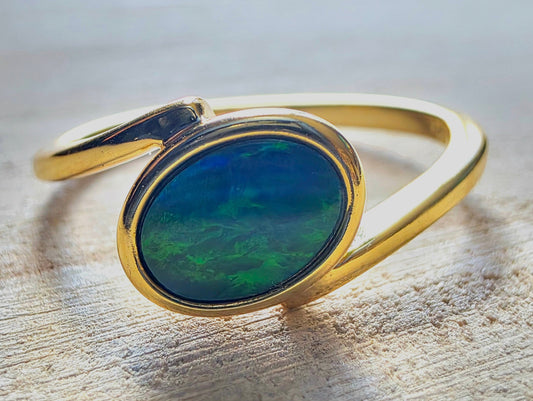
- Black opals - the rarest and most prized, with a dark body tone that makes colours pop dramatically. Found almost exclusively in Lightning Ridge, New South Wales.
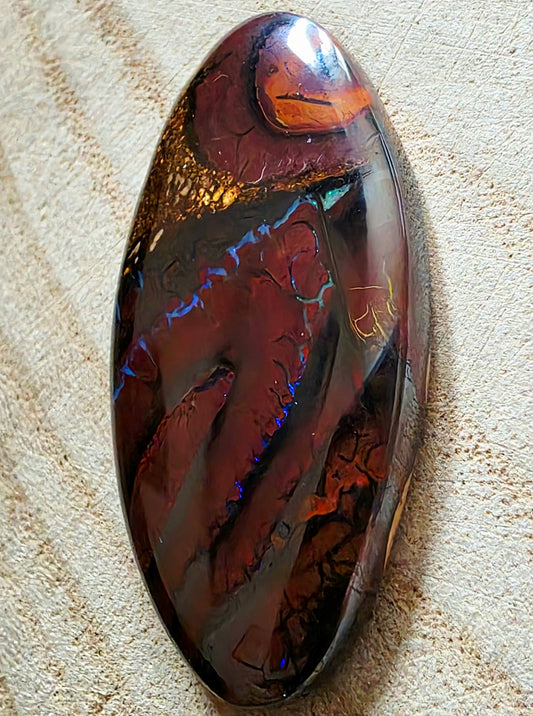
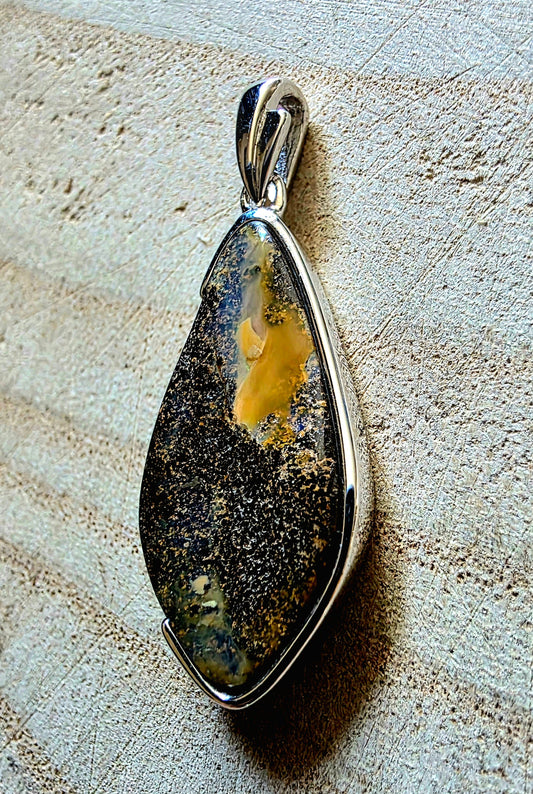
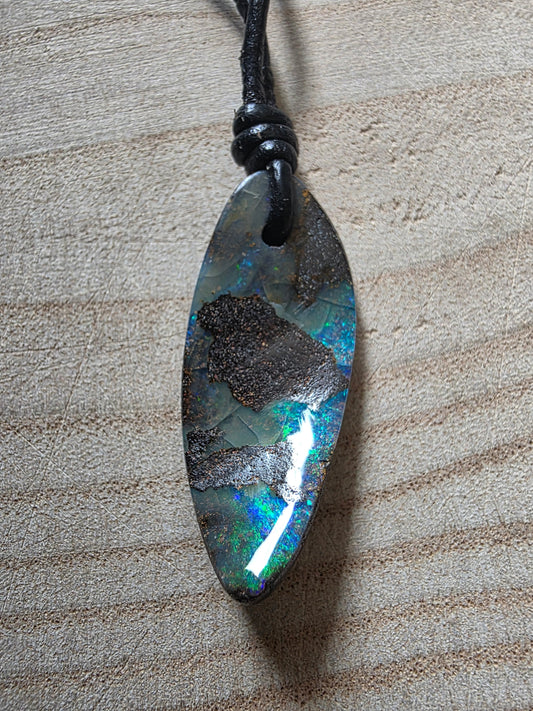
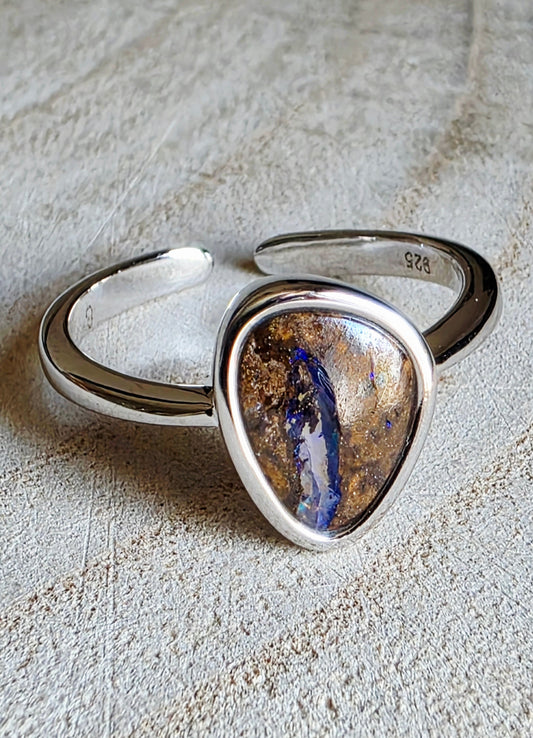
- Boulder opals - formed within ironstone host rock, giving a naturally dark backing that intensifies colour. Mined in Queensland, Australia.
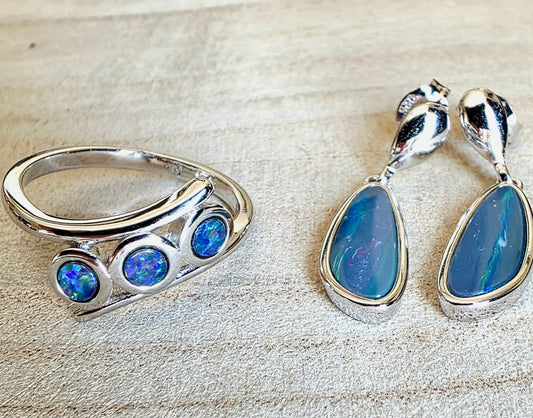
- Crystal opals - transparent to semi-transparent, allowing light to pass through and creating a luminous, glowing effect.
- White opals - a milky, light body tone; the most commonly seen opal type, often displaying soft pastel play-of-colour.
Play-of-Colour: What It Is and Why It Happens
The phenomenon that makes opals truly extraordinary is called play-of-colour - the shifting, spectral flashes of colour that move as you tilt the stone. This is caused by the diffraction of light through millions of tiny, uniformly arranged silica spheres within the opal's structure. The size and arrangement of these spheres determines which wavelengths of light are diffracted, and therefore which colours you see.
Larger spheres produce red and orange; smaller spheres produce blue and violet. The most valuable opals display the full visible spectrum.
The Most Prized Opal Colours
Within the trade, certain colours command a premium:
- Red flash - the rarest and most valuable play-of-colour, particularly on a black body tone.
- Orange and gold - warm, fiery tones that are highly sought after.
- Green and teal - vivid and common in boulder opals; very popular in contemporary jewellery.
- Blue and violet - cool, electric tones often seen in crystal opals.
A stone displaying red, orange, and green across its face - known as a harlequin pattern - is considered among the finest opal specimens in the world.
How to Read an Opal's Colour Grading
When buying an opal, look for three things:
- Body tone (N1–N9 scale) - darker is generally more valuable.
- Brightness (B1–B5 scale) - how vivid and intense the play-of-colour appears.
- Pattern - the arrangement of colour across the stone (harlequin, rolling flash, pinfire, etc.).
These three factors, combined with the dominant colour and the stone's origin, determine its overall value.
Australian Opal Provenance: Why It Matters
Australia produces over 95% of the world's precious opals. At Georgie's Gem Studio, every opal is sourced directly from Australian miners - meaning full traceability from the ground to your jewellery. Boulder opals come from Queensland's Winton and Quilpie regions; crystal and white opals from Coober Pedy and Mintabie in South Australia; black opals from Lightning Ridge in New South Wales.
Provenance isn't just a story, it's a guarantee of authenticity and ethical sourcing.
Shop Australian Opals and Jewellery
Ready to find your opal? Browse our collection of one-of-a-kind opal rings, pendants, earrings, necklaces and stones - each piece accompanied by provenance details and photography that captures the true play-of-colour.
Want to understand how we grade brightness? Read our Opal Brightness Guide: the B1–B5 scale explained
Curious about where our opals come from? Read about our Ethical Opal Sourcing